2026-10-07 · Keahi Mau
What Causes AC Short Cycling In Kailua Homes
In Kailua homes, AC short cycling is most commonly caused by restricted airflow from dirty filters or coils fouled by salt-laden trade winds blowing in from Kailua Beach Park and Lanikai Beach. This pattern repeats every few minutes as the system struggles to maintain temperature in the steady 75–85°F tropical conditions of Honolulu County, preventing proper cooling cycles and raising energy use.
Restricted Airflow From Local Conditions
Trade winds carry fine salt particles from the ocean directly into Kailua and nearby Kaneohe Bay homes, where they settle on evaporator coils and reduce heat transfer within weeks of a cleaning. Older single-family houses built before central AC became standard often have undersized return ducts that compound the problem when filters load with dust and pollen year-round. Residents notice the compressor shutting off before the thermostat reaches setpoint, typically after 5–10 minutes of operation. Regular checks on filter condition every 30–45 days prevent most of these airflow restrictions in the humid environment.
Refrigerant Leaks and Coil Corrosion
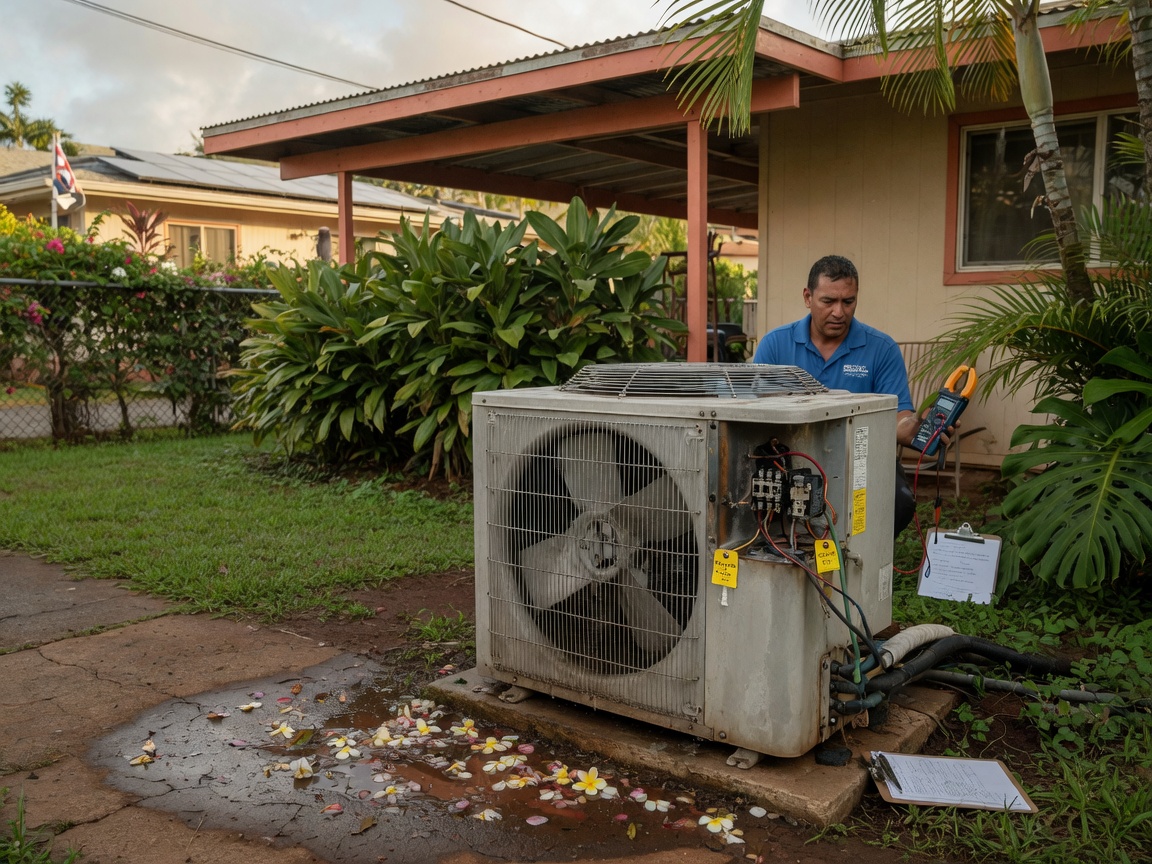
Salt air accelerates corrosion on outdoor condenser coils in homes near Ulupo Heiau State Historic Site and along Kaneohe Bay, creating pinhole leaks that drop refrigerant levels below the 10–15% threshold needed for normal operation. When charge falls too low, the low-pressure switch trips the system repeatedly, producing the short cycles typical in coastal Honolulu County properties. Technicians often find these leaks during inspections on units 8–12 years old, where factory coatings have worn thin from constant wind exposure. Addressing leaks early avoids compressor damage that requires full replacement.
Thermostat Placement and Oversizing Issues
Many Kailua homes have thermostats mounted on interior walls exposed to direct sunlight or near windows facing trade-wind directions, causing false temperature readings that shut the system down prematurely. Oversized units installed to handle peak summer loads cycle too quickly in the mild 70–80°F evenings common here, never reaching steady-state efficiency. Proper sizing accounts for the thermal mass of concrete slab homes prevalent in Lanikai and the consistent humidity that keeps indoor loads steady rather than spiking. AC Maintenance visits help identify these mismatches before they shorten equipment life.
Electrical and Sensor Faults in Humid Settings
High humidity in Honolulu County corrodes contactors and capacitors inside outdoor units, leading to voltage drops that trigger safety shutoffs every 3–7 minutes. Faulty temperature sensors on the evaporator coil misread conditions and cut the cycle short, especially in systems serving multi-story homes in Kaneohe Bay where upstairs and downstairs loads differ. These electrical issues appear more frequently in units without recent service, as moisture intrusion builds over time. How To Clean AC Coils In Kailua's Salty Air outlines steps that reduce sensor errors when performed seasonally.
Practical Steps for Kailua Homeowners
Start by replacing the filter and confirming the thermostat is away from heat sources or drafts. Schedule a full system inspection if cycles remain under 10 minutes, focusing on refrigerant charge and coil condition. Homeowners in Lanikai often combine this with duct sealing to improve airflow in older construction. AC Repair addresses immediate faults while AC Filter Replacement Guide For Kailua Residents provides timing tailored to local pollen and salt loads. Consistent attention keeps systems running through the steady trade-wind season without repeated interruptions.