
2026-10-07 · Keahi Mau
How To Clean AC Coils In Kailua's Salty Air
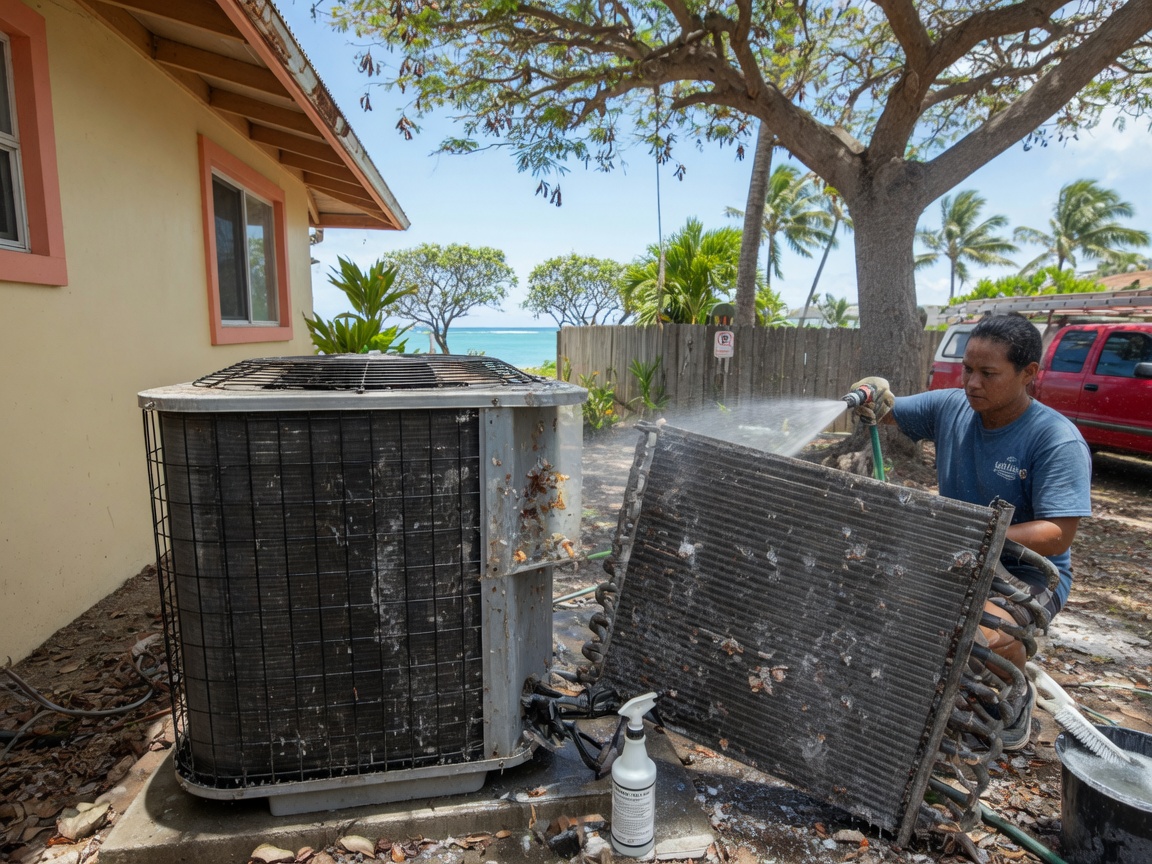
Cleaning AC coils exposed to Kailua's salty air starts with turning off power at the unit and breaker, then rinsing visible salt and debris with a low-pressure hose before applying a non-acidic coil cleaner formulated for marine environments. This approach addresses the accelerated corrosion that trade winds push inland from Kailua Beach Park and Lanikai Beach toward homes in Lanikai and Kaneohe Bay. The process takes patience because salt crystals embed in the fins and continue eating at the metal long after the air feels dry.
Why Salty Air Speeds Coil Damage in Kailua Homes
Kailua sits directly on the windward coast where consistent trade winds pick up salt from the ocean and carry it across neighborhoods like Lanikai and toward Ulupo Heiau State Historic Site. Older single-story homes common in these areas often have outdoor condensing units placed in yards or on rooftops with little shielding, so salt settles on the coils year-round. Warm temperatures keep the system running daily, which pulls more air across the fins and packs salt deeper. Over time this creates pitting that reduces heat transfer and forces the compressor to work harder. Residents near Kaneohe Bay notice the same pattern because the same winds sweep across the bay before reaching their properties. Checking coils during routine visits reveals white crust forming within weeks of a heavy trade-wind period.
Tools and Safety Steps Before You Begin
Gather a fin comb, soft-bristle brush, coil cleaner safe for aluminum, distilled water, and eye protection. Shut off power at both the thermostat and the disconnect box outside the home before touching any component. Wear gloves because cleaners can irritate skin even when diluted. Position a catch pan or towels beneath the unit to keep runoff from soaking into soil near the foundation, a common issue on the clay-heavy lots found throughout Kailua. Work in the morning when trade winds are lighter so mist does not drift onto neighboring properties. Never use a pressure washer on the fins; the force bends them and worsens airflow restriction.
Step-by-Step Coil Cleaning Process
First remove the access panel on the outdoor unit and gently brush loose debris from the fins with the fin comb. Spray the coil cleaner evenly across both sides and let it dwell for the time listed on the product label, usually five to ten minutes. Rinse thoroughly with low-pressure water from a garden hose, directing flow from the inside out so loosened salt exits the unit. Straighten any bent fins with the comb after rinsing. Allow the coils to dry completely before restoring power. Repeat the inspection after the next heavy wind event to see how quickly new salt accumulates. Homeowners who also follow the guidance in the AC Filter Replacement Guide For Kailua Residents keep indoor airflow balanced and reduce strain on the cleaned coils.
How Often Cleaning Is Needed and When to Schedule AC Repair
Homes within a few blocks of Kailua Beach Park or Lanikai Beach typically need coil attention more often than properties farther inland near Kaneohe. Visual checks every three to four months catch early buildup before corrosion advances. If fins show pitting or the unit struggles to hold temperature during afternoon heat, contact a technician for AC Repair rather than continuing DIY cleaning. Professional service can include deeper chemical cleaning and fin replacement when damage is advanced. Linking this work to regular AC Maintenance visits keeps the entire system running efficiently in Honolulu County's constant humidity.
Professional Help and Ongoing Care in Honolulu County
When coils show heavy corrosion or the system short-cycles after cleaning, schedule service through Kailua Bay AC & Ventilation at 418 Kuulei Rd Ste K1. Technicians familiar with windward conditions can recommend protective coatings suited to salty air and check refrigerant levels at the same time. Pairing coil cleaning with the steps in What Causes AC Short Cycling In Kailua Homes helps identify related issues before they lead to compressor failure. Consistent attention to these details protects equipment against the specific challenges of living between the ocean and the Ko'olau mountains.